



ICE Campus
ICE Campus is Malta's digital skills academy. Its old website was outdated and losing ground in Google, and AI assistants were not recommending it. 9H rebuilt icecampus.com on Next.js and Payload CMS, moved more than 700 pages with zero downtime and very little effort from the team, and connected it to HubSpot, Stripe and the Circle learning platform. The team now keeps the site up to date by asking Claude.
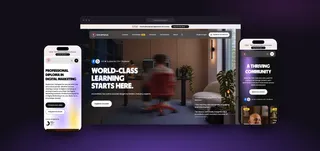
In short: 9H rebuilt icecampus.com, the website of Malta's digital skills academy, on Next.js 16 and Payload CMS 3. The new site scores 100/100 on Google PageSpeed for accessibility, best practices and SEO, and its main content appears in under a second on desktop. It is built to be found and quoted by Google and AI assistants, sends every form to HubSpot, takes payments through Stripe, adds learners to Circle, and can be updated by asking Claude. More than 700 pages moved across with zero downtime and very little effort from the ICE Campus team.
Why did ICE Campus need a new website?
ICE Campus runs accredited, live online courses in digital marketing, design, technology, data and productivity. Its website is the front door for all of it, and the old one had become the weak point:
- It was outdated. The design and the technology behind it had fallen behind what students and search engines expect.
- It was losing ground in search. Rankings for the courses ICE Campus teaches were slipping.
- AI assistants were not recommending it. When people asked tools like ChatGPT or Perplexity where to learn digital skills in Malta, ICE Campus was missing from the answers.
- It was hard to keep up to date. More than a hundred courses, hundreds of news and blog posts and a busy class schedule meant constant edits.
The brief was clear: a faster, modern website that search engines and AI can understand, and that the ICE Campus team can run themselves.
What did 9H build?
We rebuilt the whole site on the stack 9H now recommends for ambitious websites: Next.js 16 for the front end, Payload CMS 3 as the editing system, PostgreSQL for the data, and Vercel for hosting in Frankfurt. The site covers courses, a live schedule, stories, news and blog, taster classes, invitations, corporate pages, payments and a help centre, all editable by the team.
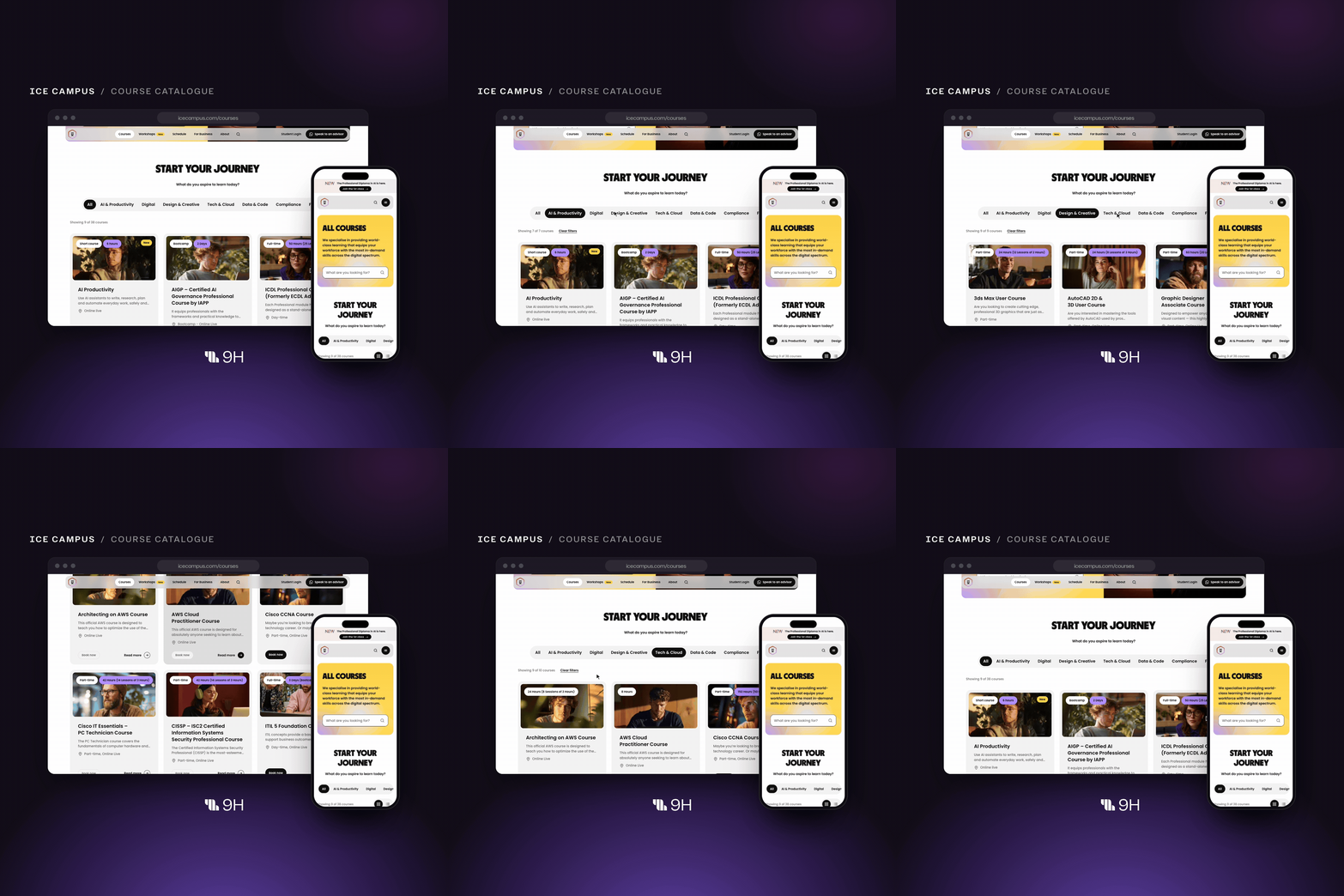
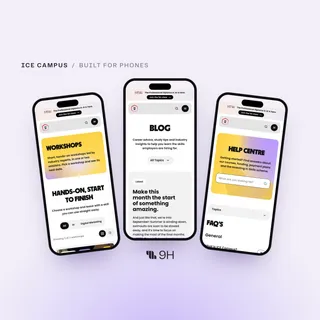
It is just as sharp on a phone, where most students first arrive:
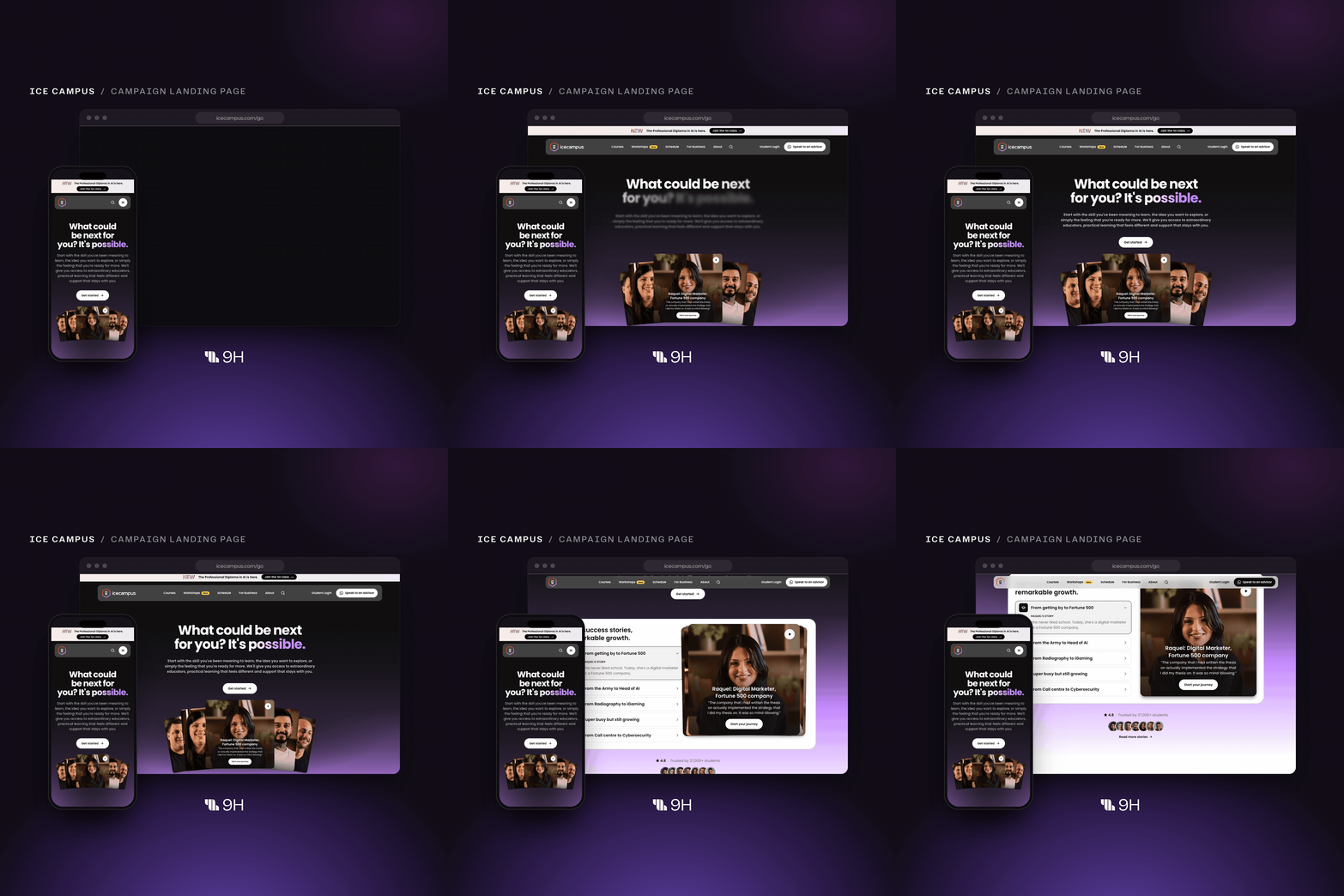
Campaign landing pages are part of the build too. Pages like /go give marketing a focused page with its own story and animation, tracked end to end:
If you are weighing a similar project, our custom web application development team builds this way, and custom software development in Malta explains why we chose this stack.
How was a 700-page website moved with zero downtime?
The old site had 107 courses, 463 posts and 244 pages. A rebuild on that scale usually means a risky switch-over weekend, broken links and a dip in rankings. We did it differently:
- We audited everything first. Every page, post and course was reviewed and given a decision: keep, merge or retire.
- We moved the content for them. The ICE Campus team did not have to copy, paste or re-enter anything. Courses, stories, news, images and metadata were imported and checked by 9H.
- We mapped every old address to its new one. More than 380 permanent (301) redirects send visitors and search engines straight to the right new page in a single hop, and pages we retired answer correctly instead of showing errors.
- We tested the switch before it happened. An automated check followed the redirects, so problems were found before visitors could meet them.
- We switched without taking the site offline. Visitors, Google and the ICE Campus team kept working throughout, and the effort needed from ICE Campus was minimal.
Today the sitemap lists around 700 pages, all live, with their search value carried across.
How does the new site get found by Google and by AI assistants?
The site is built to be understood by machines as well as people:
- Fast, clean pages. Search engines reward speed, and so do visitors.
- Structured data. Pages describe themselves in machine-readable form (the organisation, breadcrumbs, FAQs and more), so search engines know exactly what each page is.
- An llms.txt file. A plain-language map of the site written for AI assistants: what ICE Campus is, what it teaches and where to find the courses and the schedule.
- A complete sitemap and instant notifications. New and changed pages are announced to search engines as they are published.
- Clear, quotable answers. Content that answers questions directly is what AI assistants pick up.
It is the same approach we describe in SEO and AI search (AIO): make the site easy to crawl, easy to understand and easy to cite.
How does the ICE Campus team update the site? By asking Claude.
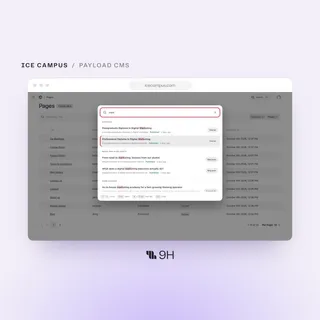
The CMS is simple enough for anyone on the team, and it has Claude built in. Administrators can open a chat beside any page and say what they want in plain words: "Change the intro on this course page", "Add the new workshop to the schedule", "Rewrite this meta description". Colleagues can also connect Claude directly to the CMS and edit the website from a normal conversation. Even finding content is quick, with a search across every course, post and page:
It is safe by design:
- Everything Claude changes is saved as a draft first.
- Publishing, deleting and changes to menus or redirects need a confirmation from the person who asked.
- Claude works with that person's own permissions, never more.
The team no longer waits for a developer for everyday updates. It is the kind of AI automation 9H builds into the websites we deliver.
How are leads tracked from every form and campaign?
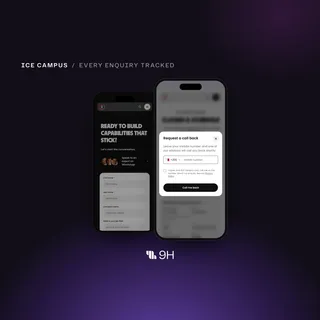
Every form on the site, from taster classes and course enquiries to brochure downloads and callback requests, is tracked end to end:
- Where it came from. Each lead records the page, the course, the first referring website, the campaign tags (UTM) and the ad click identifiers, so the team can see which campaign produced which enquiry.
- Into the CRM. Every enquiry creates a contact and a deal in HubSpot, in the right pipeline, with the full attribution attached.
- Into analytics and ads. Around fifteen events (form submissions, bookings, payments and more) flow to Google Analytics and the ad platforms, with visitor consent respected.
- Nothing gets lost. If an email or the CRM is briefly unavailable, the lead is kept and retried.
How do HubSpot and the schedule page work together?
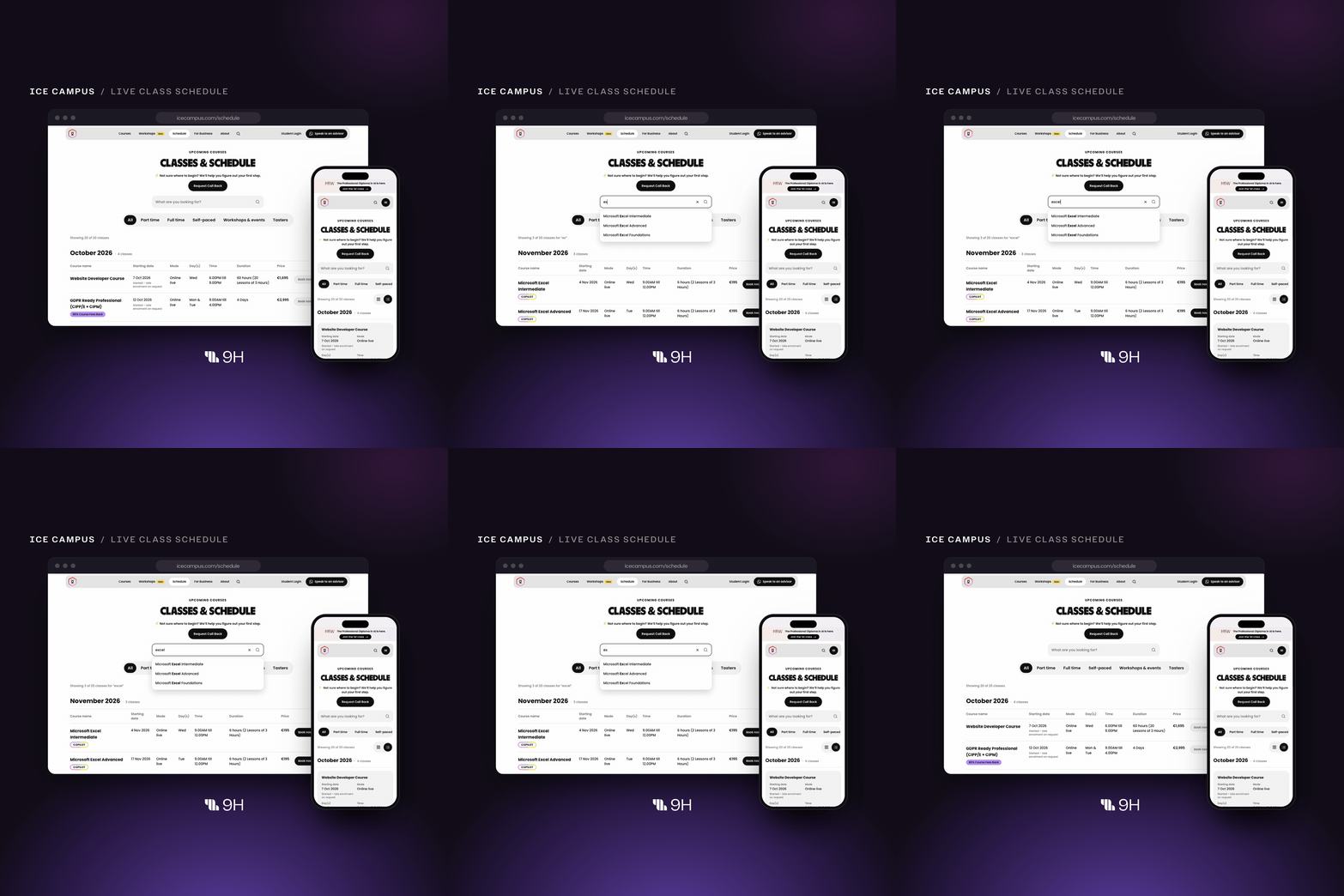
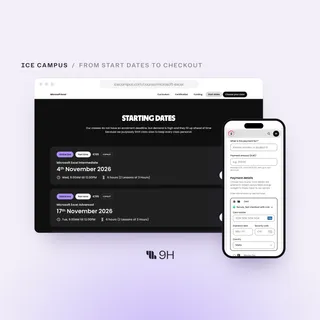
The schedule page is where students decide when to start. It lists upcoming classes, searches as you type, and every course page shows its next start dates. A "request a callback" on the schedule creates a HubSpot deal for the sales team, so a visitor's interest becomes a follow-up without anyone copying details across. See CRM and ERP integration for how we connect systems like this.
How do payments and Circle enrolment work?
Learners pay directly through Stripe: card, Apple Pay, Google Pay and other methods, right inside the page. Card details never touch the ICE Campus website. Learners who book are added to the Circle learning platform, and every booking is reported to Google Analytics and Meta, so campaigns are measured on real sales.
How well does the new website perform?
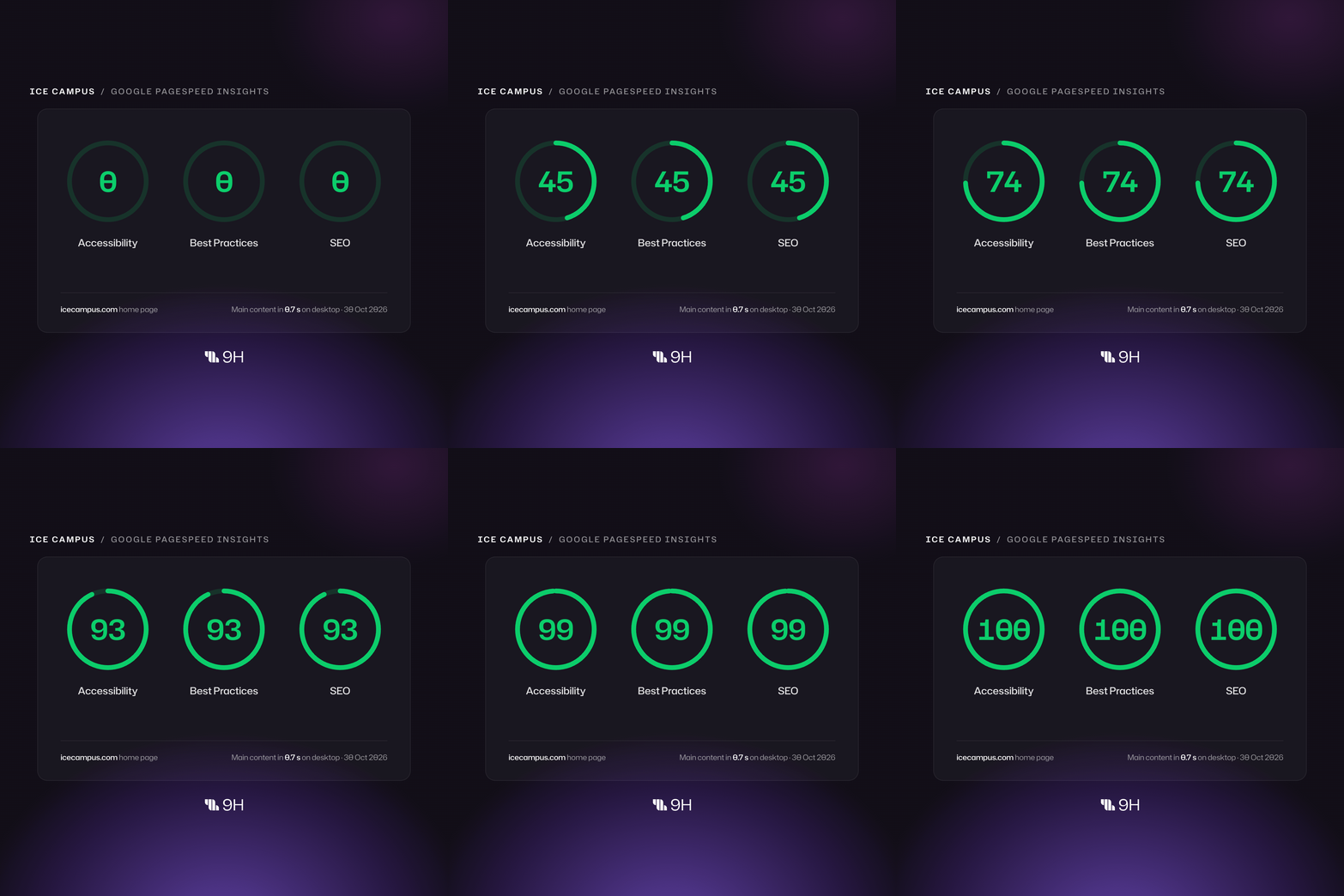
Google PageSpeed Insights scored the icecampus.com home page 100/100 for Accessibility, Best Practices and SEO (30 October 2026). On desktop the main content appears in 0.7 seconds. That speed comes from how the site is built: Next.js, hosting on Vercel's network in Frankfurt and optimised images.
What did ICE Campus get? Results at a glance
- A modern Next.js and Payload CMS website, live with zero downtime and very little effort from the ICE Campus team.
- 100/100 on Google PageSpeed for accessibility, best practices and SEO, with the main content appearing in under a second on desktop.
- A CMS the team updates by prompting Claude.
- Lead tracking on every form and every digital campaign, flowing into HubSpot.
- Stripe payments with learners added to Circle.
- A site built for Google and AI assistants: structured data, llms.txt, a clean sitemap and one-hop redirects.
Frequently asked questions
Can I update my website by chatting with AI?
Yes. On ICE Campus the team can ask Claude to edit pages, add content and fix wording from inside the CMS or from a normal Claude conversation. Changes are saved as drafts first, and nothing goes live until the person confirms.
Can a website be rebuilt without any downtime?
Yes, when the migration is planned page by page. For ICE Campus we audited every page, moved the content for the team, mapped every old address to a new one with permanent redirects, tested the switch, and moved the domain without taking the site offline.
Why build a website on Next.js and Payload CMS?
Next.js gives fast pages that search engines and visitors like, and Payload CMS gives editors a clean, flexible editing system that developers can extend. Together they make it straightforward to connect HubSpot, Stripe and other tools, and to add AI to the editing workflow.
Can the website connect to HubSpot, Stripe and Circle?
Yes. ICE Campus forms create HubSpot contacts and deals with full campaign attribution, payments run through Stripe, and learners who book are added to Circle.
How do I make my website visible to ChatGPT and other AI assistants?
Make the site fast and crawlable, describe every page with structured data, publish an llms.txt file that explains who you are and what you offer, keep the sitemap clean, and write clear answers to the questions people ask. That is how we approached icecampus.com.
Is it safe to let AI edit a website?
It is when the controls are right: every change is a draft first, publishing and deleting need an explicit confirmation, and the AI only has the permissions of the person using it.
Planning something similar?
If your website is slow, hard to update or invisible to AI assistants, talk to 9H. Book a call and we will show you how we would approach it.
This article was created with the assistance of AI and reviewed by 9H before publication.